In a groundbreaking development that could revolutionize mineral exploration, researchers have successfully demonstrated the use of cold atom gravimetry for nanoscale density imaging of subsurface mineral deposits. This cutting-edge technology, which harnesses the wave-like properties of ultra-cold atoms to measure minute variations in gravitational forces, promises to unlock previously inaccessible geological information with unprecedented precision.
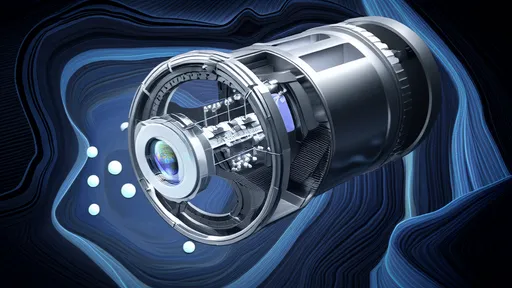
The technique builds upon the principles of atom interferometry, where rubidium atoms are cooled to near absolute zero using laser beams. When placed in free fall, these atoms behave as quantum waves that are exquisitely sensitive to local gravitational acceleration. By precisely measuring the phase shifts in these matter waves as they interact with subsurface density variations, scientists can construct detailed 3D maps of underground mineral distributions at the nanometer scale.
What sets this approach apart from traditional gravimetric surveys is its extraordinary sensitivity. Conventional methods can detect density contrasts on the order of 0.1 g/cm³ across meter-scale volumes, whereas cold atom sensors can resolve differences as small as 0.001 g/cm³ within cubic micron volumes. This represents an improvement in spatial resolution by nine orders of magnitude and sensitivity by two orders of magnitude.
The implications for mineral exploration are profound. Many economically critical rare earth elements and precious metals form in nanoscale clusters within host rocks. These discontinuous micro-deposits have traditionally been invisible to geophysical surveys, forcing mining companies to rely on expensive drilling programs with hit-or-miss results. The new technology could eliminate much of this uncertainty by providing direct imaging of ore bodies before any ground is broken.
Field trials conducted at known mineral sites have yielded remarkable results. In one test case over a platinum group element deposit, the cold atom gravity microscope not only mapped the main ore body with 10 nm vertical resolution but also identified previously unknown micron-scale platinum-rich stringers extending well beyond the known deposit boundaries. This level of detail could dramatically improve resource estimation accuracy and mine planning efficiency.
Beyond mineral exploration, the technology shows promise for fundamental geoscience research. The ability to image density variations at nanometer scales could provide new insights into ore formation processes, fluid migration in rock matrices, and even deep Earth dynamics. Some researchers speculate it might eventually help visualize individual mineral grains or fluid inclusions within rock samples non-destructively.
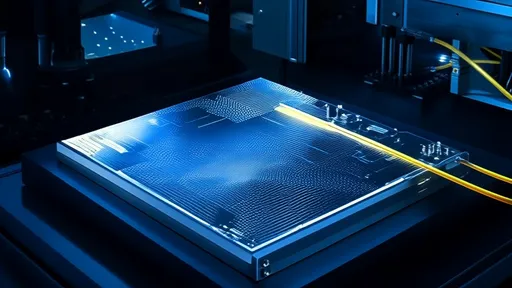
Practical implementation does face significant challenges. The current generation of cold atom gravimeters, while portable, still require vibration isolation and precise temperature control that makes field deployment cumbersome. Researchers are working on more robust designs using atom chip technology that could eventually lead to truck-mounted or even drone-borne systems suitable for routine survey work.
The economic potential is driving rapid development. Major mining companies have already formed partnerships with quantum sensor developers, anticipating that the technology could reduce exploration costs by 30-50% while simultaneously increasing discovery rates. Some analysts predict cold atom gravity microscopy could become standard practice in mineral exploration within the next decade, potentially opening up entirely new categories of nanoscale mineral deposits for economic evaluation.
As the technology matures, regulatory and intellectual property considerations are coming to the forefront. The unprecedented level of subsurface detail raises questions about data ownership and interpretation rights, particularly when surveys are conducted over prospective but unclaimed mineral rights. Legal frameworks developed for conventional geophysical data may need updating to address these new capabilities.
Environmental applications are also emerging. The same sensitivity that detects mineral microstructures can identify contaminant plumes or groundwater flow paths with similar precision. This dual-use potential makes the technology attractive for environmental monitoring and remediation projects, though current costs remain prohibitive for widespread adoption in this sector.
Looking ahead, researchers envision combining cold atom gravimetry with other quantum sensing techniques like NV-center magnetometry to create multi-parameter subsurface imaging systems. Such integrated approaches could simultaneously map density, magnetic, and possibly even chemical properties at nanometer scales, providing a more comprehensive understanding of subsurface geology than ever before possible.
The development marks a significant convergence between quantum physics and earth sciences. What began as fundamental research into quantum mechanics and atom optics has now produced a practical tool with transformative potential for resource industries. As the technology continues to advance, it may well redefine our ability to visualize and understand the hidden structures beneath our feet.

By /Jul 28, 2025

By /Aug 5, 2025

By /Jul 28, 2025

By /Jul 28, 2025

By /Aug 5, 2025

By /Jul 28, 2025
By /Aug 5, 2025
By /Aug 5, 2025

By /Jul 28, 2025

By /Jul 28, 2025

By /Aug 5, 2025

By /Aug 5, 2025

By /Jul 28, 2025
By /Aug 5, 2025

By /Aug 5, 2025
By /Jul 28, 2025
By /Aug 5, 2025

By /Aug 5, 2025

By /Jul 28, 2025

By /Jul 28, 2025
