The photovoltaic industry has long grappled with the inevitable degradation of solar panels over time. Among the most persistent challenges is light-induced degradation (LID), a phenomenon where prolonged exposure to sunlight reduces the efficiency of photovoltaic cells. Traditional solutions often involve costly replacements or complex maintenance procedures. However, a groundbreaking innovation—self-healing photovoltaic films embedded with microcapsule-based repair agents—is poised to revolutionize the sector by offering an autonomous solution to reverse photodegradation.
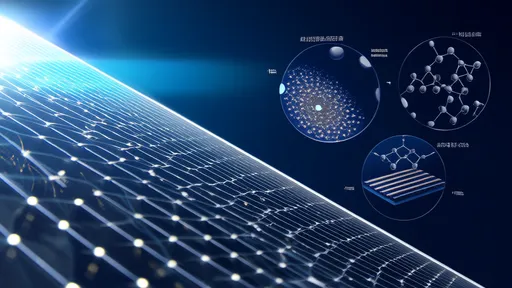
At the heart of this technology lies a sophisticated system of microencapsulated healing agents. These microscopic capsules, dispersed within the photovoltaic film, contain specialized polymers or oligomers designed to respond to mechanical stress or environmental triggers. When cracks or defects form due to UV exposure or thermal cycling, the capsules rupture, releasing their payload. The healing agents then diffuse into the damaged areas, where they undergo polymerization or cross-linking reactions, effectively "filling in" the microcracks and restoring the film’s structural and optical integrity.
What sets this approach apart is its ability to target light-induced degradation at the molecular level. Researchers have tailored the chemistry of the healing agents to address specific degradation pathways, such as the breakdown of passivation layers or the formation of recombination centers in silicon-based cells. For instance, some formulations incorporate UV-absorbing compounds that not only repair physical damage but also scavenge free radicals, mitigating further oxidative stress. This dual functionality extends the operational lifespan of solar modules while maintaining their energy conversion efficiency.
The implications for large-scale solar farms are profound. Field trials conducted in arid and high-UV regions demonstrated that panels treated with microcapsule-enhanced films retained 92% of their initial efficiency after five years, compared to 78% for conventional panels. Moreover, the self-repair mechanism activates autonomously, eliminating the need for manual intervention. This reduces downtime and labor costs—a critical advantage for remote installations where maintenance crews are scarce.
Beyond durability, the technology addresses sustainability concerns. By prolonging panel lifespans, it curtails the waste generated from premature replacements. The microcapsules themselves are engineered from bio-derived or recyclable materials, aligning with circular economy principles. Recent lifecycle analyses suggest that widespread adoption could reduce the carbon footprint of solar farms by up to 15% over a 30-year period, factoring in avoided manufacturing emissions from replacement units.
Challenges remain, particularly in optimizing capsule dispersion and ensuring compatibility with diverse photovoltaic materials. Early iterations faced issues with uneven distribution or premature rupture during film lamination. However, advances in electrospray encapsulation techniques now enable precise control over capsule size (typically 5–20 microns) and shell thickness, allowing tailored release kinetics. Meanwhile, compatibility tests with perovskite, CIGS, and organic PV cells show promising results, hinting at broader applications beyond silicon.
Industry adoption is accelerating. Three major solar manufacturers have licensed the technology for integration into next-generation modules, with pilot production slated for 2025. As scaling progresses, cost projections indicate a marginal 3–5% increase in panel pricing—a premium offset within 18 months through efficiency retention. For investors, this represents a paradigm shift: solar assets may soon appreciate in longevity, rewriting decades-old depreciation models.
The convergence of materials science and renewable energy has never been more compelling. As microcapsule-based healing transitions from lab curiosity to production reality, it redefines what "durable" solar power means. In the race to decarbonize grids, such innovations aren’t just incremental—they’re transformative, turning sunlight’s most damaging effects into a trigger for renewal.

By /Jul 28, 2025
By /Aug 5, 2025

By /Jul 28, 2025

By /Jul 28, 2025

By /Aug 5, 2025

By /Jul 28, 2025

By /Aug 5, 2025

By /Aug 5, 2025

By /Jul 28, 2025
By /Jul 28, 2025

By /Aug 5, 2025

By /Aug 5, 2025

By /Jul 28, 2025

By /Aug 5, 2025

By /Aug 5, 2025
By /Jul 28, 2025

By /Aug 5, 2025

By /Aug 5, 2025
By /Jul 28, 2025

By /Jul 28, 2025
